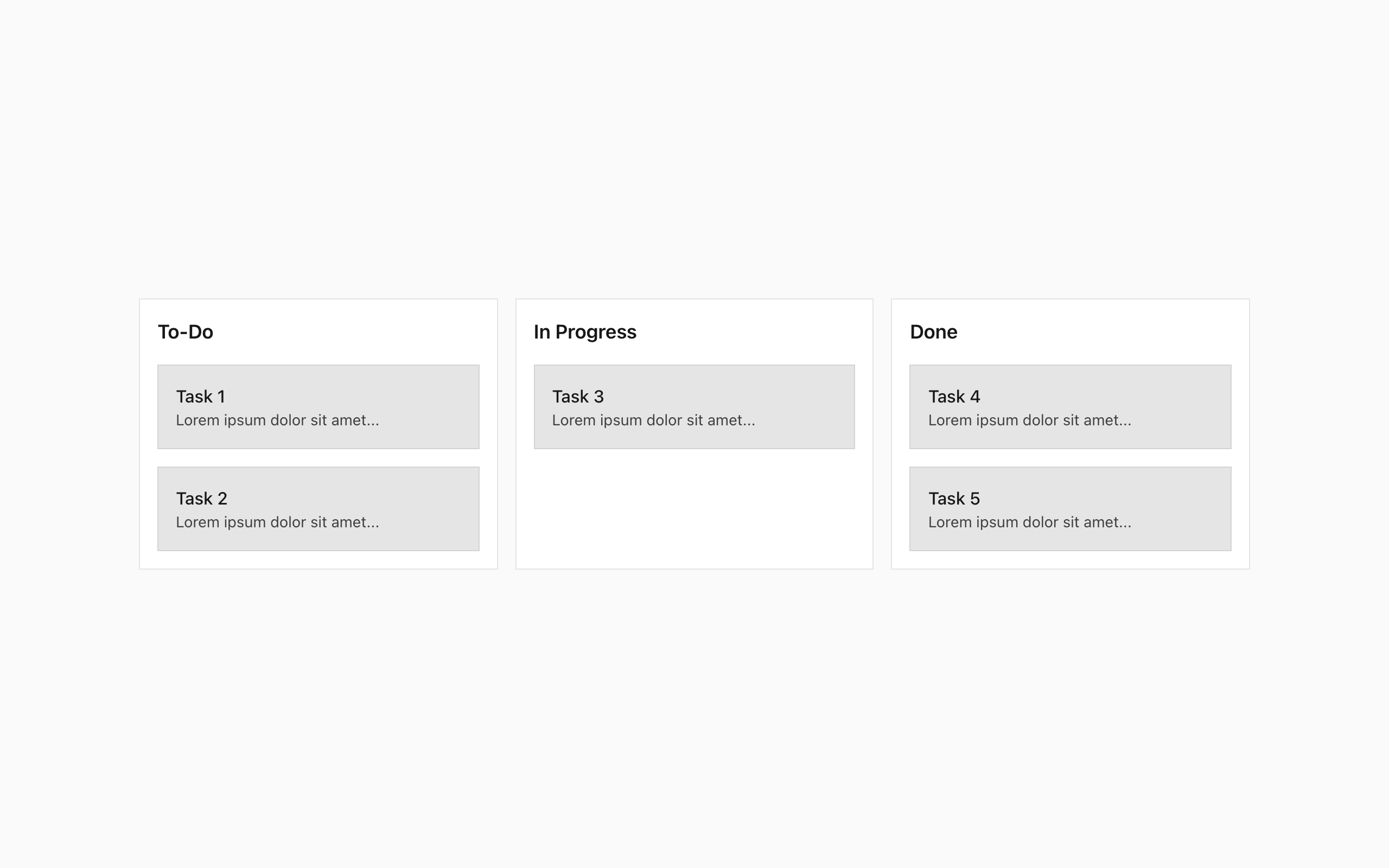
Kanban Board
Design a Kanban board for tracking work across a project pipeline. Use a clear multi-column layout with stage labels such as Backlog, In Progress, Review, and Done. The board should support both broad overview and fast task movement, so cards need to read quickly even when the board is dense.
Each card should surface only the essentials: task title, assignee, priority, due date, and any small status markers that matter for scanning. Make drag-and-drop feel explicit with visible drop zones, hovered column feedback, and a distinct dragged-card preview. Reordering within a column should be as clear as moving between columns.
Show the important board states: an empty column, a column with too many cards to fit, and a card being edited or removed. Add controls for creating a new card and moving cards without dragging, so the board still works when precision input is poor. Keep the layout stable while cards move, and make selection, focus, and action affordances easy to find.
Incorporate engaging micro-interactions for task manipulation to enhance the user experience, such as a satisfying 'snap' when a task card is moved to a new column.
Better at UI design with every challenge
Select complexity and generate challenge.
Pick a platform.
Get design challenge updates in your inbox
New prompts and challenge updates. It’s free.